

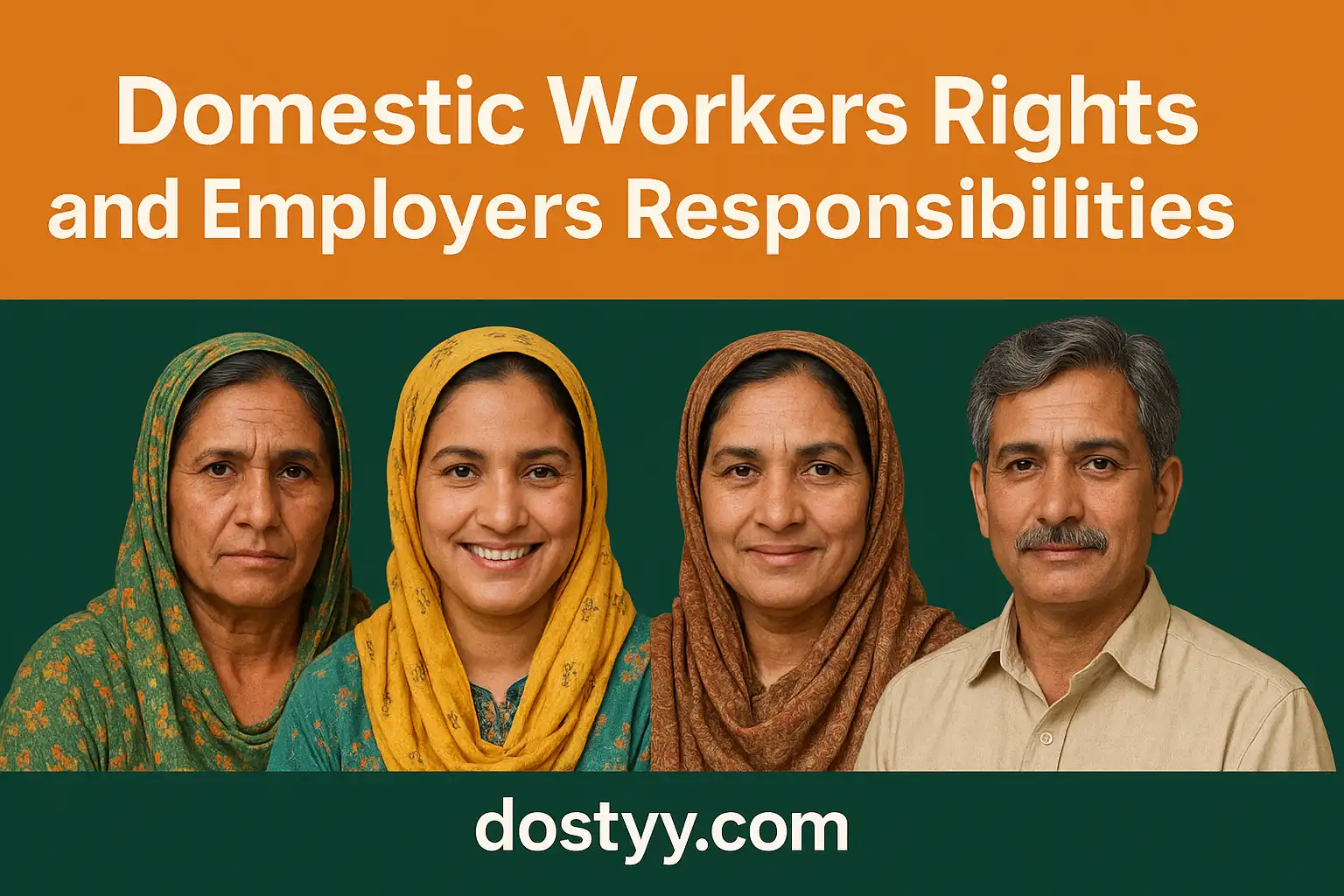
Domestic Workers Rights and Employers Responsibilities
- Jul 15, 2025
- 0
1. Human and Moral Perspective on Domestic Workers' Rights
• Respect for Mankind: Whether someone is a CEO or a maid servant, human dignity remains the same. Islam and global ethics place a high value on every soul.
• Eloquent Manners of Speech: The Prophet Muhammad (PBUH) has stated, "Whoever remains silent is safe." This teaches us to communicate with kindness and spare no kind words.
• Justice in Behavior: Every worker, particularly those who work in homes, is entitled to fair behavior, rest, food, and timely wages.
2. Islamic Principles of Treatment of Domestic Helpers
• Justice & Equality: Islam expects justice in every transaction. "Do not oppress anyone," is a reiterated Quranic dictum.
• Compassionate Conduct: The Prophet (PBUH) prohibited to strike or insult workers and ordered to feed them the same as we eat.
• Service as Worship: Service to mankind is akin to worship in Islam. The Quran advocates kindness to the weak and poor.
3. Legal Protection of Domestic Workers in Pakistan
Punjab Domestic Workers Act 2019
• Written Contract: Compulsory at the beginning of employment.
• Working Hours: Not more than 8 hours/day with one holiday a week.
• Health & Safety: The gharelu mulazimeen are entitled to safe working conditions and treatment by a doctor in case of injury or sickness.
• No Discrimination: No gender, religion, caste discrimination.
Other Legal Examples
• Islamabad Domestic Workers Act 2021: Stipulates maximum working hours a day and provides protection.
• Sindh Home-Based Workers Act 2018: Provides special protection for female domestic workers (gharelu mulazima).
• ILO Convention 189: Although not yet completely implemented, it provides an international set of rights.
4. Employers' Responsibilities – A Three-Pronged Perspective
|
Responsibility |
Islamic View |
Moral Duty |
Legal Obligation |
|
Respect |
Treat with dignity |
Recognize humanity |
No verbal/physical abuse |
|
Fair Wages |
"Pay before sweat dries" |
Eliminate poverty |
Comply with minimum wage |
|
Work Hours |
Avoid overwork |
Ensure rest |
8 hours max |
|
Health & Safety |
Protect life |
Provide clean space |
Safe workplace mandatory |
|
Written Agreement |
Fulfill promises |
Build trust |
Legal requirement |
|
No Discrimination |
“All humans are equal” |
Equal treatment |
Protected by law |
5. Practical Guidelines for Employers
- Treat them with respect – Use the term Domestic Help instead of Servant.
- Value their work – Even a kind word can motivate.
- Respect time – Provide rest, holidays, and meal breaks.
- Formalize employment – Have written contracts.
- Ensure safety – Provide a clean, secure environment.
- Avoid discrimination – Treat equally regardless of background.
- Comply with the law – Stay informed and compliant.
6. Final Thoughts
Domestic workers (Gharelu Mulazimin) are the unsung support system of our households. They need to be protected, treated with dignity, and dealt with in a just manner—legally, ethically, and religiously. Honoring them improves society, generates trust, and brings blessings to our households.
Related: Tips for Hiring a Best Gharelu Mulazim
Let us be the change. Let us make a Pakistan where no worker is abused, silenced, or neglected.
Call to Action
Speak with your household workers today. Ask what they need. Listen. Adjust accordingly. It begins with one conversation and one act of human decency.
Together, we can build homes—and a country—founded on dignity, equality, and humanity.
0 Comments
Add your review
Explore related articles

The Punjab Enforcement and Regulatory Authority (PERA) has officially announced exciting...

dostyy
The job landscape in Punjab is transforming rapidly with the launch of the Arzi Muawin P...
dostyy

Punjab Government unveiled a new digital payment system for public transport. Chief Minister ...