

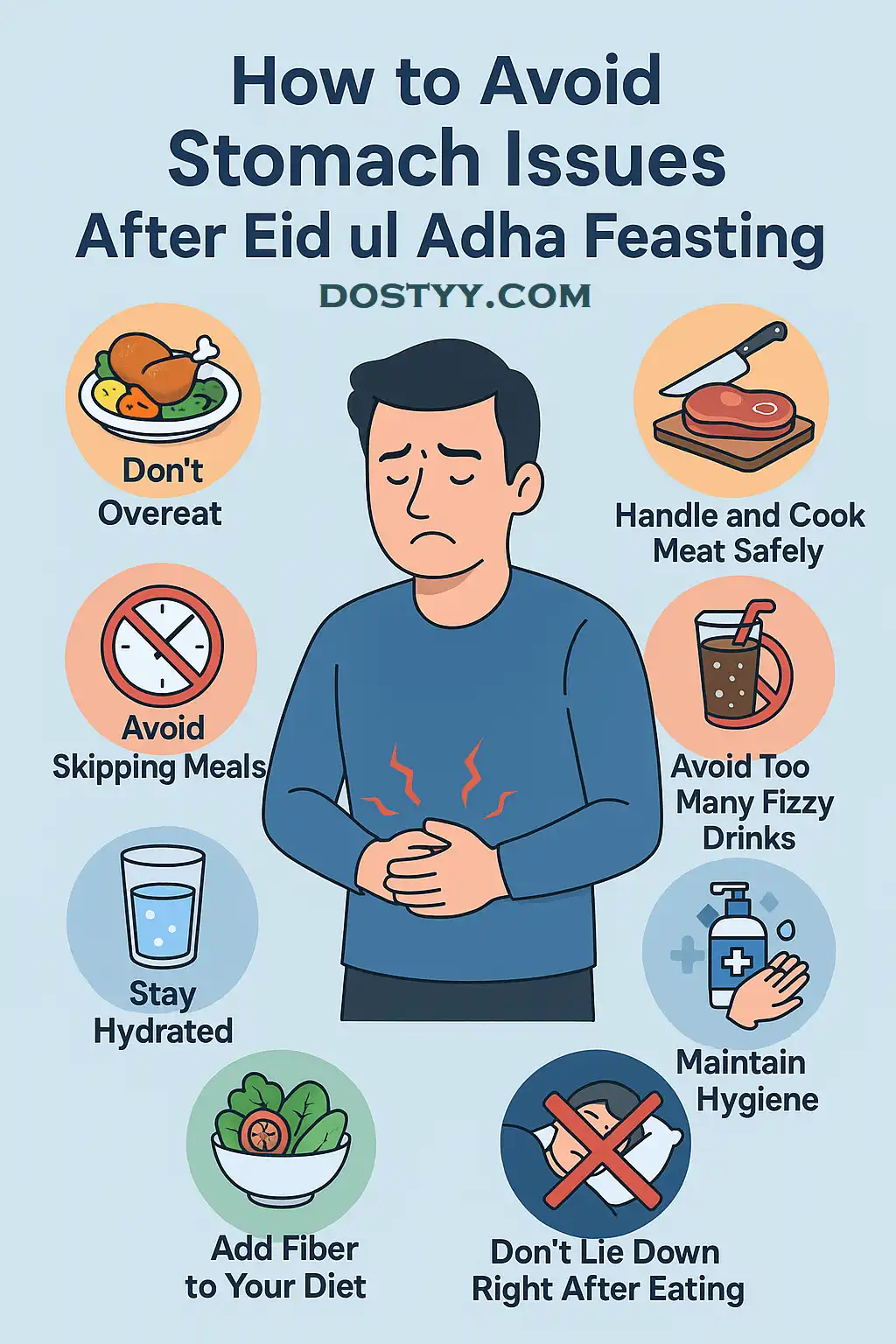
How to Avoid Stomach Issues After Eid ul Adha Feasting
- May 22, 2025
- 0
Eid ul Adha is a time of celebration, sacrifice, and feasting in Muslim world. Families gather to enjoy traditional delicacies made with freshly sacrificed meat. Although indulging in such rich foods forms part of the celebratory season, a number of people experience stomach discomfort, bloating, acidity, or digestive disturbances during or after Eid.
Below are some simple tips to avoid stomach issues after Eid ul Adha feasting for your convenience.
1. Avoid Overeating – Eat Moderately
Overeating is the main cause of people feeling uneasy in the stomach on Eid. You easily tend to overeat when you are surrounded by rich food like biryani, kebabs, kaleji, etc.
Tip: Do not overload your plate in one sitting. Eat small bites day and night. Listen to your body — stop when satisfied.
2. Don't Skip Meals Prior to the Feast
Others skip breakfast or lunch in order to "save space" for the big Eid feast. This leads to acidity and bloating when you actually end up consuming a huge meal. Eat a light but nutritious breakfast instead in order to maintain your level of digestion throughout the day.
3. Drink Lots of Water
Meat foods tend to make your body thirsty. Constipation and delayed digestion are a consequence of dehydration. Have lots of water, particularly after greasy or spicy food.
4. Dietary Fiber Boost
Eid food is high on meat and lacking in fiber. Constipation or stomach aches can follow. Salad, fruits, or whole grain must be added to your diet for easy digestion.
5. Safe Handling and Cooking of Meat
Improperly handled meat is the primary cause of stomach infection during Eid. Ensure the meat is fresh, clean, and properly cooked. Don't eat raw meat, and don't forget to wash hands and tools thoroughly after dealing with raw meat.
For learning how to select clean and healthy animals prior to Qurbani, visit our Guide to Selecting a Healthy Qurbani Animal in Pakistan
6. Do Not Consume Too Much Carbonated Beverages
Soft drinks could be pleasant to drink while attending a feast, but actually delay digestion and make the body produce gas or swell up. Have plain water, lemonade, or yogurt-based beverages like lassi instead.
7. Follow Personal Hygiene While Cooking and Serving
Make sure that the cooking area and serving table are clean. Bacteria that cause food poisoning or diarrhea can be introduced by unclean utensils or spoiled food.
8. Do Not Lie Down Shortly After Eating
Don't lie down shortly after a big meal — it will trigger acid reflux or indigestion. Go for a light walk or wait at least 2 hours before lying down.
A Festival of Feasting and Livelihood
Eid ul Adha is not only accompanied by religious celebration and family bonding — it is also followed by temporary jobs and an impetus to local economies. Whether butchers, transporters, or domestic workers, various individuals economically benefit from this festival. Read more in our blog:
How Eid ul Adha Boosts Business and Jobs in Pakistan
Final Thoughts
Eid ul Adha: a time to party and give thanks — and that goes for being good to your gut too. Eating mindfully, plenty of water, and good sanitation, you can have your fun without giving your gut the heave-ho.
Wishing you a healthy, happy, and safe Eid!
0 Comments
Add your review
Explore related articles

The Punjab Enforcement and Regulatory Authority (PERA) has officially announced exciting...

dostyy

The job landscape in Punjab is transforming rapidly with the launch of the Arzi Muawin P...
dostyy

Punjab Government unveiled a new digital payment system for public transport. Chief Minister ...